How to Weigh Weed Without a Scale (Creative Solutions)
Contents
- The Importance of Accurate Measurements
- Significance of Proper Dosing
- Legal and Safety Implications
- Alternative Methods for Weighing Weed
- Paper and Dollar Bill
- Hanger
- Smartphone App
- Ruler and Pencil
- Rubber Band Pulley
- Visual Estimation
- Conclusion
- FAQs
- What is used to weigh weed?
- Can I use household items as counterweights?
- How much weed is equal to the weight of a penny?
- Sources
Knowing how much cannabis you have helps you dose consistently and stay within legal possession limits. But what if you don't have a scale?
A digital scale is the only accurate option. Without one, a simple balance and a coin or dollar bill of known weight can give you a rough estimate. This guide shows how.
The Importance of Accurate Measurements

Photo from Deposit Photos
Measuring cannabis affects your experience, your safety and even your legal standing.
Significance of Proper Dosing
The National Academies' review of the evidence on cannabis therapeutic effects found conclusive or substantial evidence of benefit for only a few uses, such as chronic pain in adults. If you use cannabis for a health reason, work out your dose with a healthcare provider.
For adult-use consumers, consistent amounts mean a more predictable experience.
Wrong weed weight measurements can lead to unexpectedly strong effects. NIDA notes that large amounts and strong products make anxiety, panic and other bad reactions more likely.
Legal and Safety Implications
Beyond personal experiences, inaccurate dosing can have legal and safety implications.
Where cannabis is legal, possession limits apply. If you unknowingly carry more than the limit, you could face legal consequences.
Cannabis is for adults 21+ where it is legal. In the US, adult-use cannabis remains federally illegal, and state laws and limits differ.
Additionally, safety concerns arise when consumption goes beyond what you intended.
Overconsumption can impair motor skills, cognitive function and decision-making. Never drive or do anything hazardous while impaired.
Alternative Methods for Weighing Weed
These methods are not as accurate as a scale, but they can give you a rough estimate.
Paper and Dollar Bill
You can turn paper into a simple balance. Fold a sturdy sheet into a tent shape, then lay a second, zigzag-folded sheet across it so its center balances on the tent.
Place a dollar bill on one end as a counterweight. The Bureau of Engraving and Printing says a US note weighs about one gram, regardless of denomination.
Add weed to the other end until it balances. You now have roughly 1 gram.
For larger amounts, add more bills, though this method works best around 1 gram.
Hanger
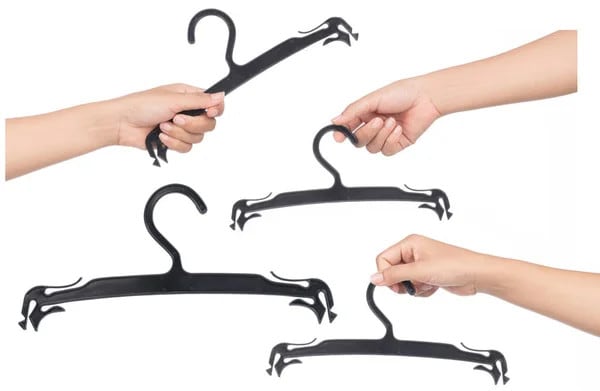
Photo from Deposit Photos
A hanger can work as a balance too. Pick a lightweight, symmetrical hanger and hang it from its hook so it sits level.
Put your cannabis in a small zip bag and tie it to one end with string. Tie an identical empty bag with a known weight to the other end.
A US penny made since 1982 weighs about 2.5 grams; older copper pennies are heavier, so check the date.
Adjust the weed until the hanger hangs level. You then have roughly 2.5 grams per penny.
Smartphone App

Photo from Deposit Photos
You may see "scale" apps that claim to weigh items placed on your phone's screen. Phones are not built to be scales, and these apps are not reliable for something as light as cannabis.
Skip this method, or treat any reading as a guess. A balance with a known counterweight is more dependable.
Ruler and Pencil
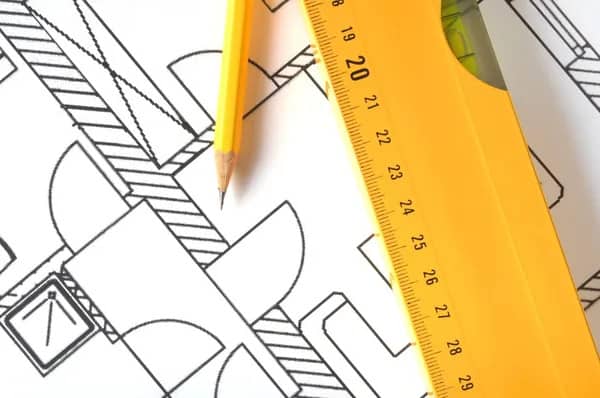
Photo from Deposit Photos
A ruler and pencil make one of the easiest balances.
Lay a round pencil on a flat surface so it can't roll. Rest the ruler on top with its midpoint on the pencil, making a seesaw.
Put a known weight at one end, at the same distance from the pencil as the weed on the other end.
A modern penny, at about 2.5 grams, works well here. That is slightly more than a dub of weed.
Add or remove weed until the ruler balances. The weed then weighs about the same as the penny.
Rubber Band Pulley
A rubber band can work as a rough hand-held balance.
Pin a small zip pouch to each end of a rubber band with safety pins. Put your weed in one pouch and a known weight, such as pennies, in the other.
Hold the middle of the band over your finger and adjust the weed until the two sides hang level.
Because it depends on a steady hand, this method is the least consistent of the balances here.
Visual Estimation
Experienced consumers often estimate by eye, comparing buds to everyday objects.
A common rule of thumb is that a bud about the size of a large grape is around one gram. Treat it as a rough guess, not a measurement.
Moisture and density change how much a bud weighs. A dense bud can look smaller than an airy bud of the same weight.
The best way to train your eye is to check your guesses against a real scale when you have one.
Conclusion
Photo from Deposit Photos
A balance made from a ruler, hanger or paper, with a dollar bill or penny as the counterweight, can give you a rough estimate. Treat these methods as a last resort, since they are prone to error.
The best option is still a digital scale.
FAQs
What is used to weigh weed?
Use a digital scale that reads to at least 0.1 gram, such as a small kitchen or jewelry scale.
Can I use household items as counterweights?
Yes. A US bill weighs about 1 gram, and a penny made since 1982 weighs about 2.5 grams. Your result is only as accurate as your balance.
How much weed is equal to the weight of a penny?
A penny made since 1982 weighs about 2.5 grams, so a balanced amount of weed is roughly 2.5 grams. Older copper pennies are heavier.
Sources
- FAQs, Bureau of Engraving and Printing
- Cannabis (Marijuana), National Institute on Drug Abuse
- The Health Effects of Cannabis and Cannabinoids: Committee's Conclusions, National Academies of Sciences, Engineering, and Medicine