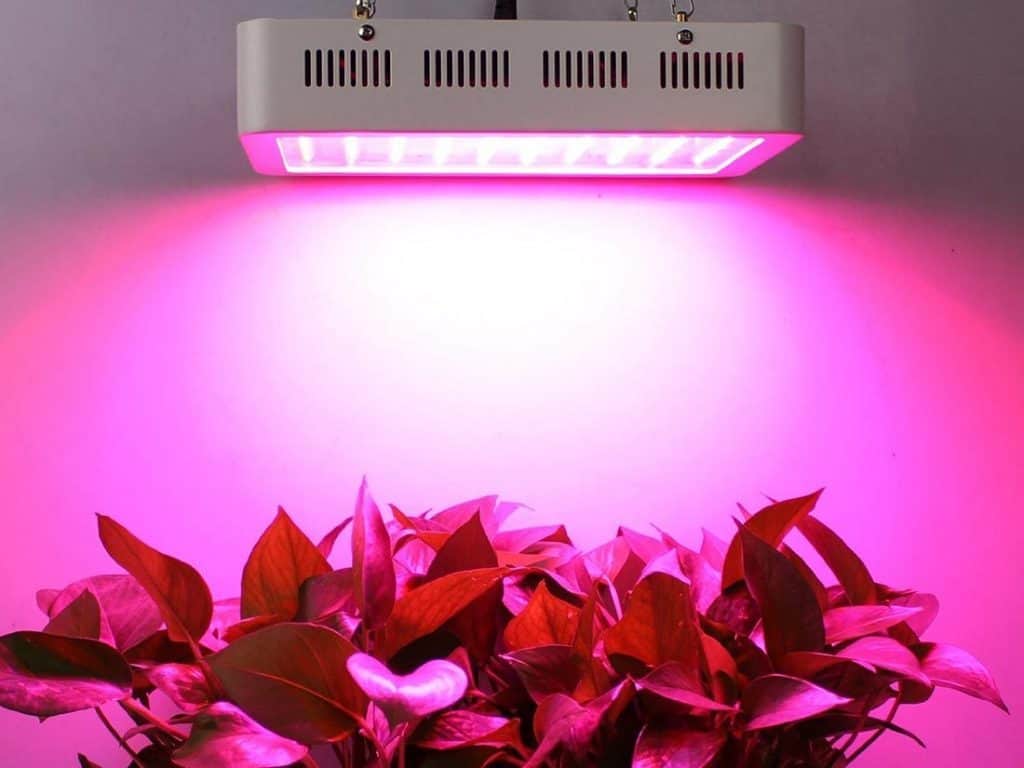
Best CO2 Regulators For Your Grow Room
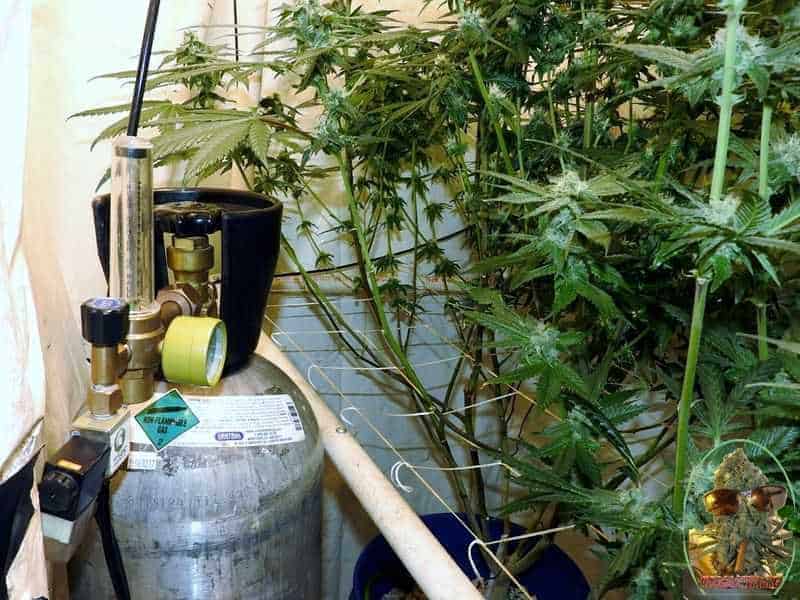
Contents
- 5 Best Carbon Dioxide (CO2) Regulators
- Leading Industry Co2 Regulators for Cannabis Grow Rooms
- 1. Grow1 Co2 Grow Room Regulator
- 2. Manatee Co2 Regulator
- 3. Titan Controls Carbon Dioxide Regulator
- 4. Vivosun Hydroponics Co2 Regulator
- 5. SPL Co2 Regulator
- How to Choose The Best Co2 Regulator: Buying Guide
- Single Versus Dual Gauge
- Ease of Controlling Co2 Flow
- Type of Valve
- Calculating the Correct Co2 Levels for Grow Room (PPM)
- Safety Features
- Final Thoughts…
- Sources
There are several ways to add CO2 to an indoor garden, but a tank with a good CO2 regulator gives the most control. Controlling the level matters for you as much as for your plants.
CO2 is a workplace hazard at high levels. OSHA's exposure limit is 5,000 ppm averaged over a workday, and NIOSH lists 40,000 ppm as immediately dangerous to life and health, per the NIOSH Pocket Guide.
Headache, dizziness and shortness of breath are warning signs. Pair any tank setup with a CO2 monitor or controller, and never let a sealed room run unattended without one.
This guide is for adults 21+ growing where it is legal. Here are five regulators worth a look, starting with our top pick the Grow1 Co2 Grow Room Regulator.
5 Best Carbon Dioxide (CO2) Regulators
| Product | Type | Notes |
|---|---|---|
| Grow1 Co2 Grow Room Regulator | Regulator, flow meter, solenoid | Our top pick |
| Manatee Co2 Regulator | Regulator, flow meter, solenoid | Brass body |
| Titan Controls Carbon Dioxide Regulator | Regulator, flow meter, solenoid | Long-running hydroponics brand |
| Vivosun Hydroponics Co2 Regulator | Regulator, flow meter, solenoid | Budget option |
| SPL Co2 Regulator | Regulator, flow meter, solenoid | Simple setup |
Check the current listing for flow range, voltage and included parts before you buy, since specs can change.
Leading Industry Co2 Regulators for Cannabis Grow Rooms
1. Grow1 Co2 Grow Room Regulator

Do you want to control as well as maintain optimum levels of CO2 in your indoor grow area or garden the right way? Look no further than the Grow1 Co2 Grow Room Regulator.
This CO2 regulator has an easy-to-read flow meter, measured in standard cubic feet per hour (SCFH).
The regulator is preset, so you get steady output pressure without fiddling with it.
It plugs into standard 120-volt timers and controllers. Run the included tubing above the canopy, since CO2 is heavier than air and sinks.
Without a digital CO2 controller, you will need a timer. Extra CO2 only helps when light, water and nutrients are not the limiting factor.
Things We Like:
- The flow meter is super easy to adjust and read
- Pre-set regulator that needs no adjustment and offers constant pressure
- Included tubing for distributing CO2 over the canopy
- Solenoid valve works with timers and controllers
Things We Didn’t Like:
- May need a timer if you don’t have a digital controller
2. Manatee Co2 Regulator

The Manatee Co2 Regulator is a straightforward brass regulator for tank-based CO2 enrichment.
It is easy to adjust the flow meter, which is made of high-quality brass. The durable brass means long-lasting dependability.
The system combines a regulator, a solenoid valve and a flow gauge. It does not make CO2; it meters gas from a tank.
With the solenoid valve in place, the regulator is triggered by reliable electronic timers. This allows you to set the output steadily during light hours and turn it off during dark hours.
It comes with a hose and a power cord for a standard household outlet.
Things We Like:
- Easy-to-read flow gauge
- Brass body for durability
- Solenoid valve works with a timer or controller
- Does not control humidity; pair it with separate humidity control gear
- Suitable for indoor gardens, greenhouses and grow rooms
Things We Didn’t Like:
- May receive a defective flow gauge
3. Titan Controls Carbon Dioxide Regulator

If you are in search for a dependable Co2 regulator for your indoor gardening that will not break the bank, look no further than the Titan Controls.
It comes with dispensing tubing and instructions that include flow meter settings and a timing chart.
A knob on the flow meter sets how much CO2 moves from the tank into the tubing.
The regulator works with most 120-volt CO2 timers and controllers, and its solenoid valve opens and closes on their signal.
Things We Like:
- Brass construction
- Solenoid valve for timer or controller use
- Includes a flow and timing chart
- Comes with dispensing tubing
- Compatible with 120V CO2 timers and controllers
Things We Didn’t Like:
- May receive a defective system that’s susceptible to leaking
4. Vivosun Hydroponics Co2 Regulator

The Vivosun Co2 Regulator ensures that your hydroponics grow room and tent receives optimal carbon dioxide supply for superior plant growth. It uses brass parts and a solenoid valve that attaches to the hose.
It has an easy-to-read pressure gauge plus a flow meter that sets how much CO2 goes into the room.
Depending on your application, you may also need to buy a Co2 monitor unit, a repeat cycle timer, or a digital wall timer. Check every connection for leaks with soapy water after setup. Use the washer or seal the maker supplies at the tank connection, not tape.
Things We Like:
- Brass parts
- Solenoid valve for timer or controller use
- Easy-to-read gauge
- Adjustable flow meter
- Fits standard CO2 tanks
Things We Didn’t Like:
- May receive a defective Co2 regulator
5. SPL Co2 Regulator

This is a good Co2 regulator for grow room, grow tent and greenhouse. This system will effectively balance carbon dioxide flow in your grow space.
It uses a direct-acting solenoid valve, so a timer or controller can switch the CO2 on and off.
The solenoid valve allows for optimal performance. You can set the Co2 output to run steadily when the lights are on, and switch it off when the lights are off.
The flow meter is easy to adjust, and the unit works with standard household-voltage timers and controllers.
Things We Like:
- Direct-acting solenoid valve
- Easy-to-adjust flow meter
- Works with standard timers and controllers
- Connects to standard CO2 tanks
Things We Didn’t Like:
- Pressure gauge may stop working and may leak
How to Choose The Best Co2 Regulator: Buying Guide
Outdoor air now holds a little over 420 parts per million (ppm) of CO2, per NOAA's Mauna Loa record. Greenhouse guidance from Ontario's agriculture ministry recommends about 1,000 ppm during the day with vents closed.
Extra CO2 can speed growth when light is strong and nothing else is limiting. It does nothing at night, when photosynthesis stops, and it is wasted while exhaust fans are venting the room.
Here are the key things you should consider when shopping for a quality Co2 regulator for grow room.
Single Versus Dual Gauge
Carbon dioxide regulators that you can use in your grow box come in dual-gauge or single-gauge setup. Both setups include a gauge that shows the output pressure reading, which is the most essential information you need.
A single-gauge regulator shows output pressure only, while a dual-gauge type also shows tank pressure.
CO2 is stored as a liquid, so tank pressure stays fairly steady until the tank is almost empty. Weighing the tank is a better way to know how much is left.
Ease of Controlling Co2 Flow
Volume matters a lot as far as controlling carbon dioxide flow is concerned. Choosing the ideal combination of devices will determine the performance of your system. There are basically two different types of flow control devices. These devices can be variable pressure or fixed pressure.
A normal flow meter can be a variable or fixed pressure device. Usually, the pressure is factory fixed. You can decrease or increase Co2 flow by adjusting the valve or variable orifice.
With that said, you will come across flow gauge regulators and flow meter regulators. For superior performance, we recommend you to choose a flow meter regulator.
The flow meter reduces and controls the standard cubic feet per hour (SCFH), while the regulator controls the pressure. Regulators with smaller flow rates, such as 0 to 15 SCFH, are preferable for grow room, grow tent, greenhouse, and indoor gardening.
It is crucial to invest in a regulator with a flow meter of superior quality because it tells how much CO2 enters the grow room.
Type of Valve
There are basically two types of valves: motorized and solenoid. The recommended valve for Co2 regulators for grow rooms is the solenoid.
Solenoid valves are ideal for controlling the volume as well as the direction of the flow of carbon dioxide gas in the grow space. A solenoid valve is electromagnetic that shifts a metal core. It lets a timer or controller release CO2 only when the grow lights are on.
Calculating the Correct Co2 Levels for Grow Room (PPM)
When using a typical carbon dioxide regulator, the amount of Co2 to be released into the grow space must be calculated with respect to the volume of the room.
To do this, multiply the dimensions of your growing environment (length*width*height). The outcome is the volume of the grows space in cubic feet.
Room air already holds about 420 ppm, so to reach 1,000 ppm you only need to add about 580 ppm. Multiply the volume by 0.00058.
For example, a 9 by 14 by 11 foot room is 1,386 cubic feet. Multiply by 0.00058 and you need about 0.8 cubic feet of CO2 to bring it to roughly 1,000 ppm.
You can ensure that your plants receive just what they need by using a simple repeating timer, which should turn on the gas flow repetitively when the lights are on.
To find how long the valve should stay open, divide the cubic feet needed by the flow rate in SCFH, then multiply by 60 for minutes. At 2 SCFH, 0.8 cubic feet takes about 24 minutes.
Plants and leaks use up CO2, so a monitor or controller that reads the actual level is far more reliable than math alone. Keep exhaust fans off during enrichment cycles, and vent the room before you go in if levels are high.
Safety Features
CO2 tanks in the US use a CGA-320 connection, so make sure the regulator matches. Secure the tank upright so it cannot fall.
Leak-test every joint with soapy water. Most important, add a CO2 monitor with an alarm, because people cannot smell CO2 and OSHA's limit is 5,000 ppm.
Final Thoughts…
Enriching a sealed grow room to around 1,000 ppm during lights-on can help plant growth when light and nutrients are already dialed in.
The regulators above are common choices among indoor growers.
You can count on the Grow1 Co2 Grow Room Regulator to properly manage the Co2 levels in your grow area.
Always remember to calculate the ideal Co2 requirements of your grow space before engaging the market.
This way, you will be able to buy the right combination of components, including a flow meter regulator, a timer or controller, and a CO2 monitor with an alarm.
Sources
- NIOSH Pocket Guide to Chemical Hazards: Carbon dioxide, CDC/NIOSH
- Supplemental carbon dioxide in greenhouses, Ontario Ministry of Agriculture
- Trends in Atmospheric Carbon Dioxide, NOAA Global Monitoring Laboratory